

How does the water absorption of PU leather substrate fabric work?
Jul 30, 2025
Hey there! As a supplier of PU Leather Substrate Fabric, I often get asked about how the water absorption of this fabric works. So, I thought I'd take a moment to break it down for you in a way that's easy to understand.
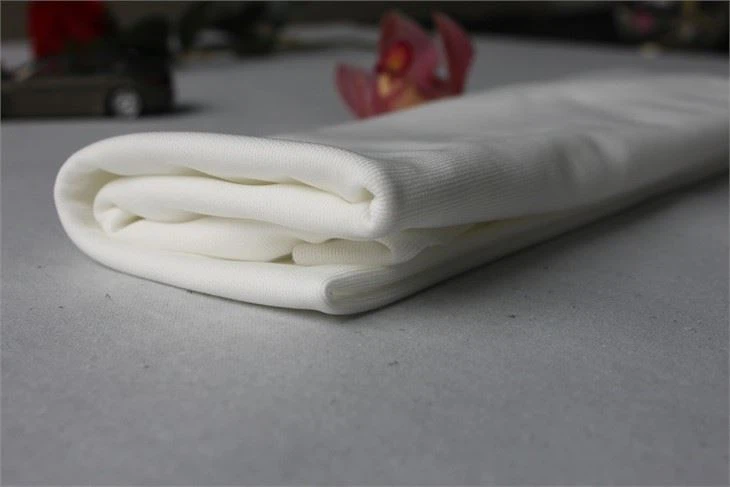
First off, let's talk about what PU leather substrate fabric is. It's a type of fabric that's used as a base for PU (polyurethane) leather. This fabric provides the structure and support for the PU coating, which gives the material its leather-like appearance and feel. There are different types of PU leather substrate fabrics, like the Knit Backing for PU Leather, Artificial Leather Substrate Fabric, and Knit Backing Cloth. Each type has its own unique properties, but they all play a crucial role in the overall performance of the PU leather.
Now, onto water absorption. Water absorption is an important characteristic of PU leather substrate fabric because it can affect the durability, comfort, and appearance of the final product. When the fabric absorbs water, it can lead to changes in its dimensions, strength, and color. So, understanding how water absorption works is key to ensuring high-quality PU leather products.

How Water Absorption Occurs
Water absorption in PU leather substrate fabric happens through a few different mechanisms. One of the main ways is through capillary action. Capillary action is the ability of a liquid to flow in narrow spaces without the assistance of, or even in opposition to, external forces like gravity. In the case of the fabric, the tiny spaces between the fibers act like tiny tubes. When the fabric comes into contact with water, the water is drawn into these spaces due to the surface tension of the water and the adhesive forces between the water molecules and the fabric fibers.
Another factor that affects water absorption is the chemical composition of the fabric. Some fibers are more hydrophilic (water-loving) than others. For example, natural fibers like cotton and wool tend to absorb more water than synthetic fibers like polyester. The chemical structure of the fibers determines how easily water molecules can attach to them. Fibers with more polar groups on their surface are more likely to attract water molecules and thus have higher water absorption rates.
The porosity of the fabric also plays a role. A fabric with a higher porosity, meaning it has more open spaces between the fibers, will generally absorb more water than a fabric with a lower porosity. The way the fabric is woven or knitted can affect its porosity. For instance, a loosely woven fabric will have more space for water to penetrate compared to a tightly woven one.
Measuring Water Absorption
To measure the water absorption of PU leather substrate fabric, there are a few standard methods. One common method is the gravimetric method. In this method, a sample of the fabric is first weighed to get its dry weight. Then, the sample is immersed in water for a specific period of time, usually 24 hours. After that, the sample is removed from the water, and any excess water on the surface is removed by gently blotting it with a towel. The sample is then weighed again to get its wet weight. The difference between the wet weight and the dry weight is the amount of water absorbed by the fabric. The water absorption rate is calculated as the percentage of the water absorbed relative to the dry weight of the fabric.
Another method is the moisture regain method. This method measures the amount of water that a fabric can hold at a specific relative humidity and temperature. The fabric sample is first dried in an oven to remove all the moisture. Then, it is placed in a controlled environment with a known relative humidity and temperature. After a certain period of time, the sample is weighed again. The difference in weight before and after exposure to the humid environment gives the moisture regain of the fabric.
Impact of Water Absorption on PU Leather
The water absorption of the substrate fabric can have several impacts on the final PU leather product. One of the main impacts is on the dimensional stability. When the fabric absorbs water, it can swell, which can cause the PU leather to stretch or warp. This can be a big problem, especially in applications where precise dimensions are required, like in the automotive or furniture industries.
Water absorption can also affect the strength of the fabric. As the fabric gets wet, the fibers can become weaker, which can lead to a reduction in the overall strength of the PU leather. This can make the product more prone to tearing or damage during use.
In terms of appearance, water absorption can cause discoloration or staining of the fabric. If the water contains impurities or dyes, these can be absorbed by the fabric and leave visible marks on the surface of the PU leather. This can be a major issue for products where aesthetic appeal is important, like in fashion and interior design.
Controlling Water Absorption
As a supplier of PU leather substrate fabric, we take steps to control the water absorption of our products. One way is to choose the right fibers. We often use a blend of fibers to balance the water absorption properties. For example, we might combine a hydrophilic fiber with a hydrophobic (water-repellent) fiber to get a fabric with moderate water absorption.
We also use chemical treatments to modify the surface properties of the fabric. For instance, we can apply a water-repellent finish to the fabric. This finish creates a thin layer on the surface of the fibers that prevents water from penetrating. There are different types of water-repellent finishes available, including fluorochemical-based and silicone-based finishes.
The way we manufacture the fabric also plays a role in controlling water absorption. We can adjust the weaving or knitting parameters to change the porosity of the fabric. By making the fabric more tightly woven or knitted, we can reduce the amount of water that can penetrate the fabric.
Why It Matters for You
If you're in the market for PU leather products, understanding the water absorption of the substrate fabric is crucial. It can help you choose the right product for your specific needs. For example, if you're looking for a PU leather product that will be used in a wet environment, like in a bathroom or outdoor furniture, you'll want a product with low water absorption to ensure its durability.
On the other hand, if you're looking for a product that offers comfort, like in clothing or upholstery, a certain level of water absorption can be beneficial. A fabric that can absorb and release moisture can help keep the body dry and comfortable.
Let's Talk
If you're interested in learning more about our PU leather substrate fabric or have specific requirements regarding water absorption, we'd love to hear from you. Whether you're a manufacturer of PU leather products or a designer looking for the perfect material, we can provide you with high-quality fabric that meets your needs. Don't hesitate to reach out and start a conversation about your procurement needs. We're here to help you create the best PU leather products possible.
References
- Textile Testing Handbook, Third Edition, by David J. Vaughn
- Handbook of Fibre Chemistry, Third Edition, edited by Menachem Lewin